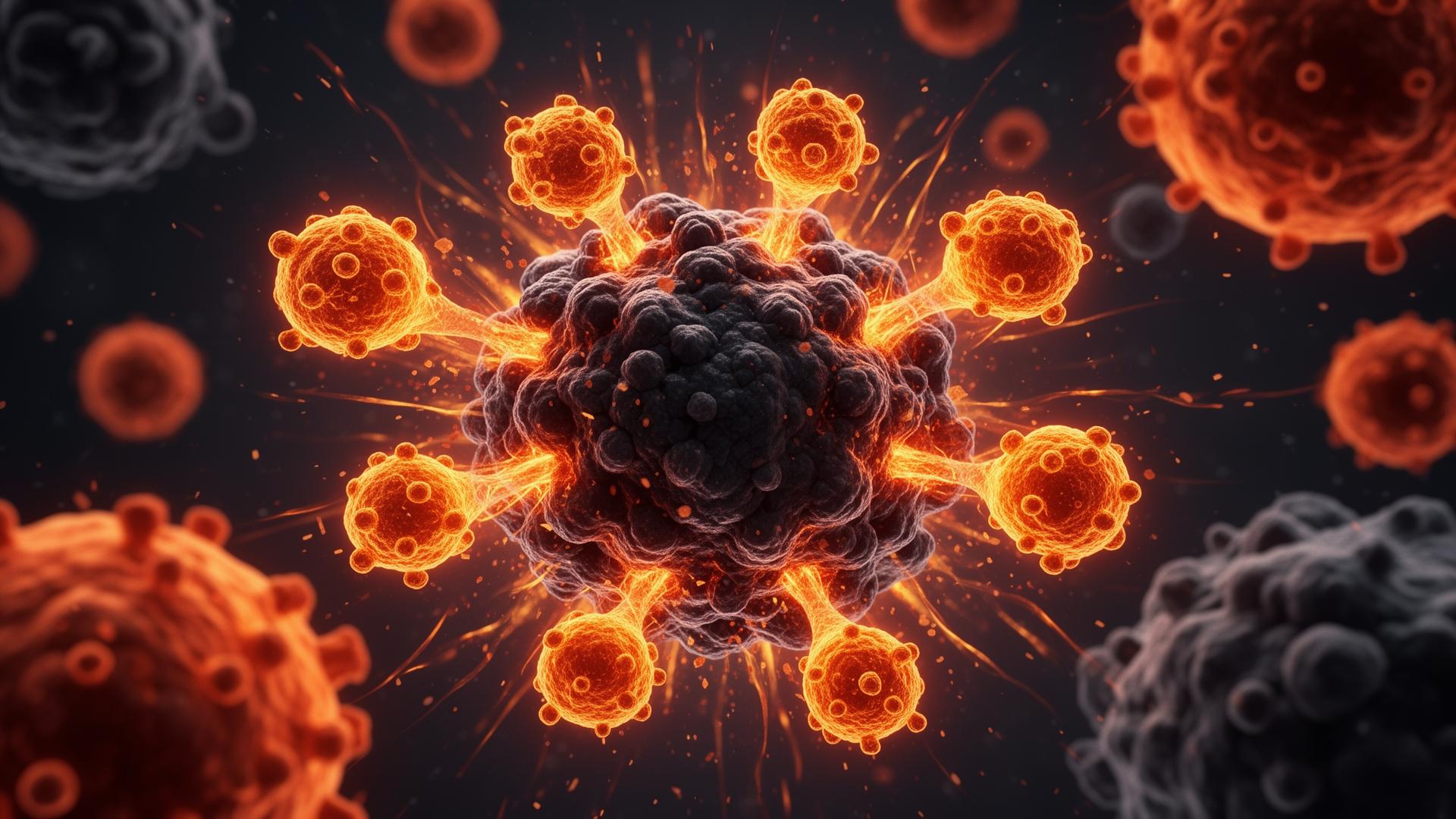
Natural Killer (NK) cells are natural warriors of the immune system, capable of identifying and destroying cancer cells without prior sensitization. After decades of research, these cells are finally reaching clinical practice as one of the most promising weapons against solid tumors.
In this article, we explain what NK cells are, how they work, why they are especially relevant for solid tumors, and what the most recent advances are in this area — including CAR-NK therapies that promise to revolutionize cancer treatment.
What are Natural Killer (NK) cells?
NK cells are lymphocytes of the innate immune system, capable of recognizing and eliminating tumor cells and virus-infected cells. Unlike T cells, which need specific "instructions" (antigen presentation), NK cells have receptors that detect changes on the surface of abnormal cells.
This ability to act "naturally" — without prior activation — is what gives these cells their name. They represent about 5-15% of circulating lymphocytes and are the first line of defense against tumors.
How NK cells destroy tumors
Recognition of the "foreign"
NK cells detect the absence of MHC class I ("identity" molecule) in tumor cells, signaling that something is wrong.
Release of cytotoxic granules
Perforins create pores in the target cell membrane, while granzymes enter and activate programmed cell death (apoptosis).
ADCC (Antibody-dependent cell-mediated cytotoxicity)
NK cells recognize antibodies bound to tumors through the CD16 receptor, enhancing destruction.
Why are solid tumors harder to treat?
While cell therapies (like CAR-T) show impressive results in hematological cancers (leukemias, lymphomas), solid tumors present unique challenges:
Immunosuppressive tumor microenvironment
Solid tumors create a "shield" of cells and molecules that inhibit the immune system, making it difficult for defense cells to enter and act.
Physical barrier
The solid tumor mass makes it difficult for immune cells to penetrate, unlike "liquid" cancers like leukemias.
Tumor heterogeneity
Cells within the same tumor may express different antigens, escaping therapies targeting a single target.
Immune evasion
Tumors develop mechanisms to "hide" from the immune system, including suppression of surface molecules.
Why are NK cells promising for solid tumors?
NK cells have characteristics that make them especially suited to face the challenges of solid tumors:
Multiple recognition mechanisms
They do not depend on a single antigen, being able to attack heterogeneous tumor cells.
Lower risk of cytokine storm
Unlike CAR-T, NK cells cause fewer severe adverse reactions like cytokine release syndrome.
Possibility of allogeneic use
Donor NK cells can be used in multiple patients, reducing costs and production time.
Action in tumor microenvironment
NK cells can recruit and activate other immune cells, amplifying the antitumor response.
CAR-NK: the next generation of immunotherapy
CAR-NK (Chimeric Antigen Receptor NK) therapies combine the natural ability of NK cells with the specificity of a chimeric receptor, allowing the attack to be directed at specific tumor antigens.
- "Off-the-shelf" production: unlike CAR-T, CAR-NK cells can be produced at large scale from donors or cell lines.
- Safety profile: lower incidence of severe adverse effects.
- Potentially lower cost: scale production reduces cost per patient.
- Multiple doses: possibility of repeated treatments.
Clinical trials and results
Several clinical trials are evaluating NK cells and CAR-NK in solid tumors, with promising results in various cancer types:
| Tumor Type | Study Phase | Target | Status |
|---|---|---|---|
| Ovarian cancer | Phase II | HER2 | Ongoing |
| Lung cancer (NSCLC) | Phase I/II | EGFR | Recruiting |
| Glioblastoma | Phase I | EGFRvIII | Preliminary results |
| Colorectal cancer | Phase II | CEA | Ongoing |
| Triple-negative breast cancer | Phase I | Multiple targets | Recruiting |
BioNK: NK cell immunotherapy in Brazil
BioNK, a company of the Axis Biotec Brazil group, is a pioneer in developing NK cell therapies for solid tumor treatment in the country. Our mission is to make advanced immunotherapy accessible to Brazilian patients.
- Research and development of CAR-NK therapies for solid tumors
- Partnerships with reference oncology centers
- NK cell expansion and activation platform
- Product pipeline in development for multiple cancer types
Frequently asked questions about NK cells
The future of NK cell immunotherapy
The field is evolving rapidly with several promising trends:
- Genetically modified NK cells with multiple CARs to attack multiple targets simultaneously.
- Combination with checkpoint inhibitors (anti-PD1, anti-PDL1) to overcome tumor immunosuppression.
- NK cells derived from iPSC (induced pluripotent stem cells) for unlimited production.
- Nanotechnology to improve NK cell delivery to the tumor.
Conclusion
NK cells represent one of the most exciting frontiers of modern oncology. Their natural ability to fight tumors, combined with advances in genetic engineering and cell production, opens possibilities previously unimaginable for patients with solid tumors.
In Brazil, companies like BioNK are working to bring these innovative therapies to patients, contributing to a future where cancer can be treated more effectively and with fewer side effects.
Dr. Carolina Cruz
BioNK
References
- Shimasaki N, et al. NK cells for cancer immunotherapy. Nature Reviews Drug Discovery, 2020.
- Liu E, et al. Use of CAR-Transduced Natural Killer Cells in CD19-Positive Lymphoid Tumors. NEJM, 2020.
- Guillerey C, et al. Targeting natural killer cells in cancer immunotherapy. Nature Immunology, 2016.
- Rezvani K, et al. Engineering Natural Killer Cells for Cancer Immunotherapy. Molecular Therapy, 2017.
- Myers JA, Miller JS. Exploring the NK cell platform for cancer immunotherapy. Nature Reviews Clinical Oncology, 2021.
- Laskowski TJ, et al. Natural killer cells in antitumour adoptive cell immunotherapy. Nature Reviews Cancer, 2022.
- ClinicalTrials.gov - NK cell therapies for solid tumors.
Follow Axis Biotec
Connect with us on LinkedIn
Get updates on science, regulation, and innovation in advanced therapies straight from our institutional feed.